Buyer Guides · May 27, 2026
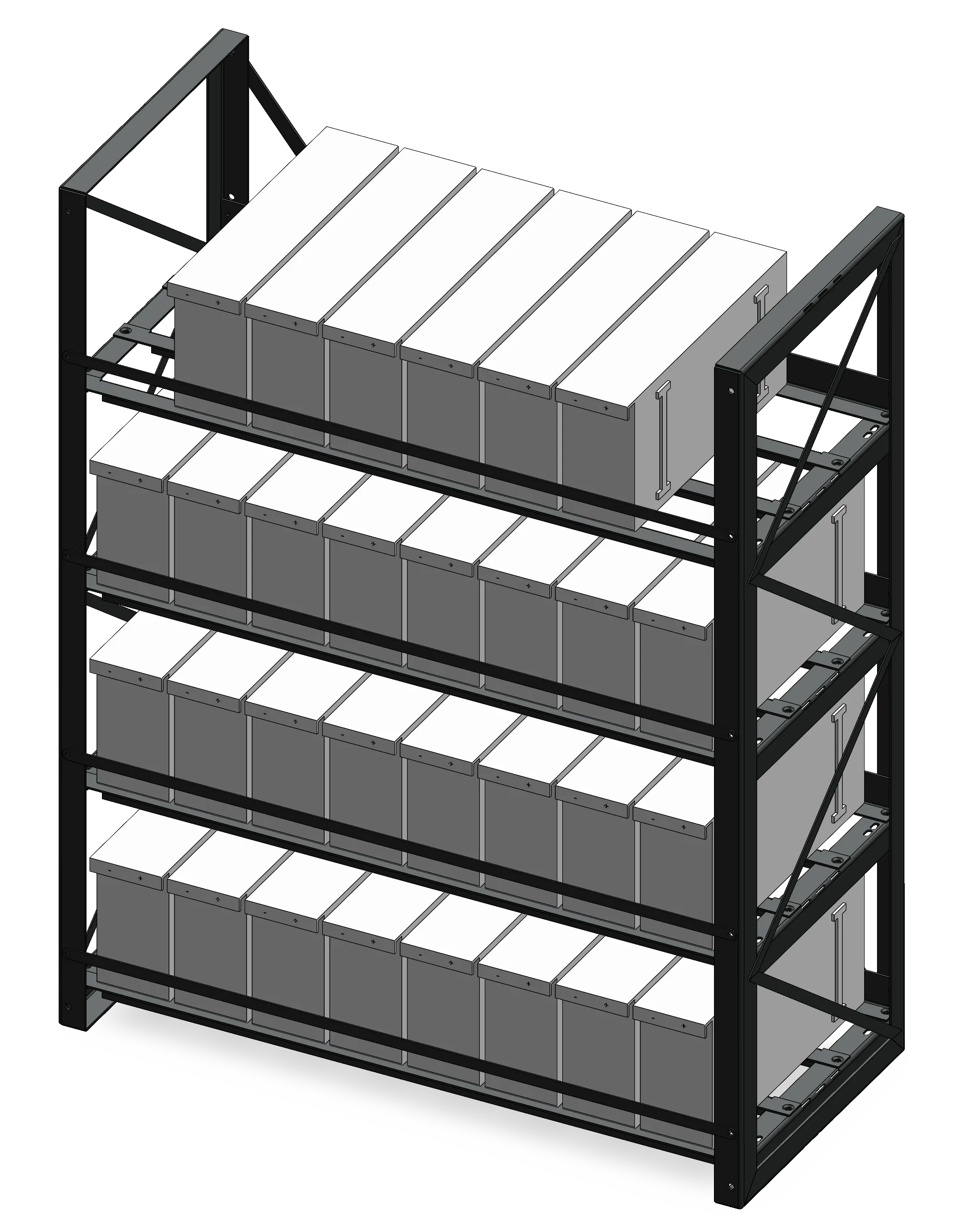
How to Choose the Right Battery Rack for Your Data Center
Choosing a battery rack for a data center is not just a matter of fit. The right rack affects safety, uptime, maintenance speed, and long-term capacity planning.
1. Start with Battery Chemistry and Cell Dimensions
- VRLA and AGM systems need predictable spacing for heat management
- Lithium systems may require manufacturer-specific spacing and restraint points
- Cell dimensions and terminal orientation drive shelf depth and rail spacing
2. Confirm Live and Future Load Requirements
- Current battery string weight per tier
- Planned expansion
- Total rack load rating with safety margin
3. Design Around Room Constraints
- Aisle widths for safe technician access
- Door and corridor clearances for delivery and placement
- Floor anchoring locations and slab condition
- Cable routing paths to avoid rework
4. Address Seismic and Anchoring Early
- Engineered anchoring details
- Cross-bracing and tie-down provisions
- Documentation for AHJ review
5. Plan for Maintenance Access
Good rack design should allow safe access to terminals and interconnects, clean routing for cables and monitoring leads, and fast replacement of individual cells.
6. Specify Finish for the Real Environment
- Indoor controlled environments: powder coat is common
- Harsh or moisture-prone areas: galvanized or enhanced coatings may be preferred
7. Require a Complete Deliverable
- Hardware included with shipment
- Installation drawings
- Anchoring guidance
- Marked components for faster field assembly